


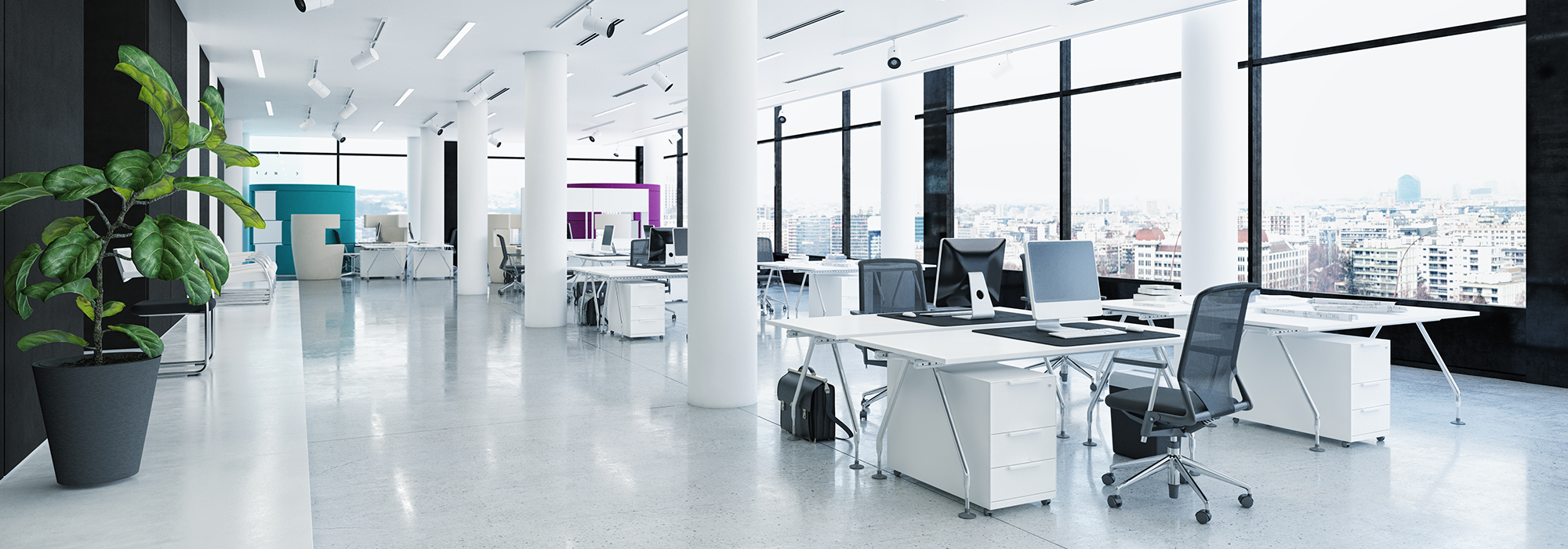
Most office cleaning happens when a facility is empty, and the part a tenant actually notices happens while it is full. Associated Building Maintenance provides recurring office cleaning services to single-tenant and multi-tenant office facilities across Maryland, Virginia, and Pennsylvania, covering both the overnight program and the daytime coverage that keeps shared areas usable between visits.
Associated has cleaned commercial facilities since 1987. We are woman owned, and our workforce of over 1,000 people maintains more than twenty million square feet every day. In an office property, scale tends to show up as consistency rather than speed, because an office program is judged on whether the same standard holds on an ordinary Tuesday, in a quiet suite that nobody inspects.
An office program is scoped at the site visit rather than from a template, so a three-story suburban office park and a single floor inside a larger property do not end up with the same schedule. The areas below are the ones most office programs are built from, and the line between them matters most in a multi-tenant property, where common areas and tenant suites are often specified separately. Recurring service is delivered through General Cleaning & Porter Services on a daily, weekly, or bi-weekly schedule.
Common areas are the part of an office facility judged by people who do not work there, including visitors, prospective tenants, and anyone a tenant is trying to impress. The work usually covers entrance glass and mats, lobby floors, elevator cabs and tracks, stair landings, and corridors.
Elevator tracks and the first few feet of entrance flooring hold most of what gets carried in from the parking lot, which is why they are often scheduled more frequently than square footage alone would suggest.
Inside the suites the work is lighter and more frequent: trash and recycling removal, surface wiping where a clear-desk policy allows it, vacuuming, and interior glass. Occupancy across a week is rarely even, and a suite that is full on Tuesday and nearly empty on Friday does not need an identical visit every night, so service levels are often set by the occupancy pattern rather than by floor area.
Restrooms and break rooms are usually the first places a shortfall gets reported, because everyone in the facility uses them and uses them daily. A nightly program typically covers fixtures, partitions, floors, dispenser restocking, break room counters, sinks, and shared appliances. High-touch surfaces in both areas are handled through disinfecting services, at a frequency set by traffic rather than by a standard template.
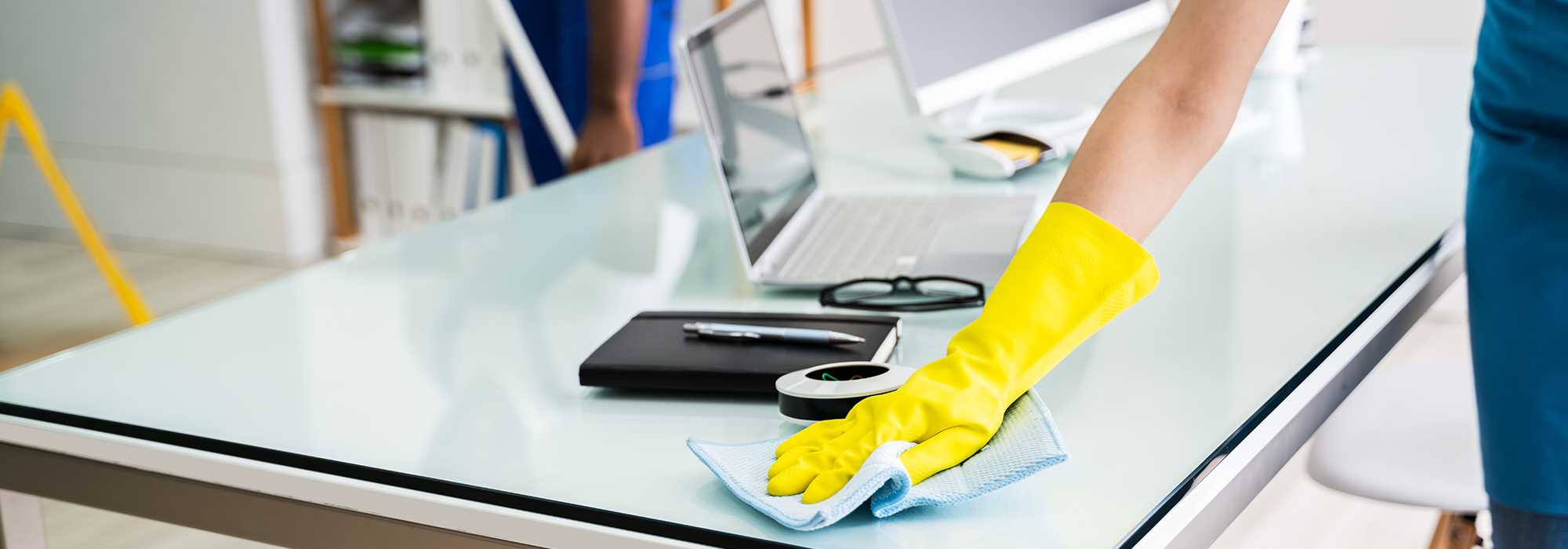
An overnight-only program leaves a gap during the daytime during which a lobby collects cups, a restroom runs out of towels, and a conference room turns over three times. Day porter services close that gap by placing a crew member on site during business hours, which is the difference between a facility that looks clean at eight in the morning and one that looks clean at three in the afternoon.
Porter work is usually a standing round plus whatever the day produces: restroom checks and restocking, lobby and entrance touch-ups, break room resets, conference room turnovers between meetings, spill response, and waste in high-traffic areas. Hours are agreed at the assessment and delivered as part of General Cleaning & Porter Services, and they are set by occupancy rather than by facility size, since a half-let floor plate above a busy ground-floor lobby may need more daytime attention than a full building with no public traffic.
The question that decides whether an office program runs quietly is how the crew gets in. Access arrangements are agreed before the first shift: badge or key issue, alarm codes, entry points after hours, elevator access between floors, and any suite that requires escorted entry. Secure areas such as server rooms, records storage, and executive suites are frequently written out of the general scope and handled separately, which is better settled in the service plan than discovered on a Monday morning. The access terms, the task list, and the inspection schedule are all agreed at the consultation and site visit, which is the first of the four steps in the program.
Crew continuity sits behind all of it. Reported retention at Associated runs above 87%, and in a facility with badge access and restricted floors a stable crew is worth more than it is on an open site, because every new person is a security onboarding as well as a training task. For the situations that will not wait, 24-hour emergency response covers water intrusion after hours, a failed appliance in a break room, or a mess in a common area before a tenant’s working day starts.
Floor maintenance in an office facility usually means several surfaces on one program: stone or tile in the lobby, hard surface through corridors and break rooms, and carpet across the suites, each on its own cycle. Carpet in a main corridor wears at a different rate from carpet in a private office, so the cycle is set by traffic rather than by a date that applies to the whole facility.
Window washing covers exterior glass, entrance glazing, and interior partitions, typically on a monthly or quarterly cycle depending on exposure and height. Periodic work rounds the program out: event cleanup covers tenant functions, annual meetings, and the days a facility is used outside its normal pattern, and post-construction cleaning covers the final clean after a tenant fit-out, a floor refresh, or a common-area renovation, which arrives with turnover rather than on a schedule.
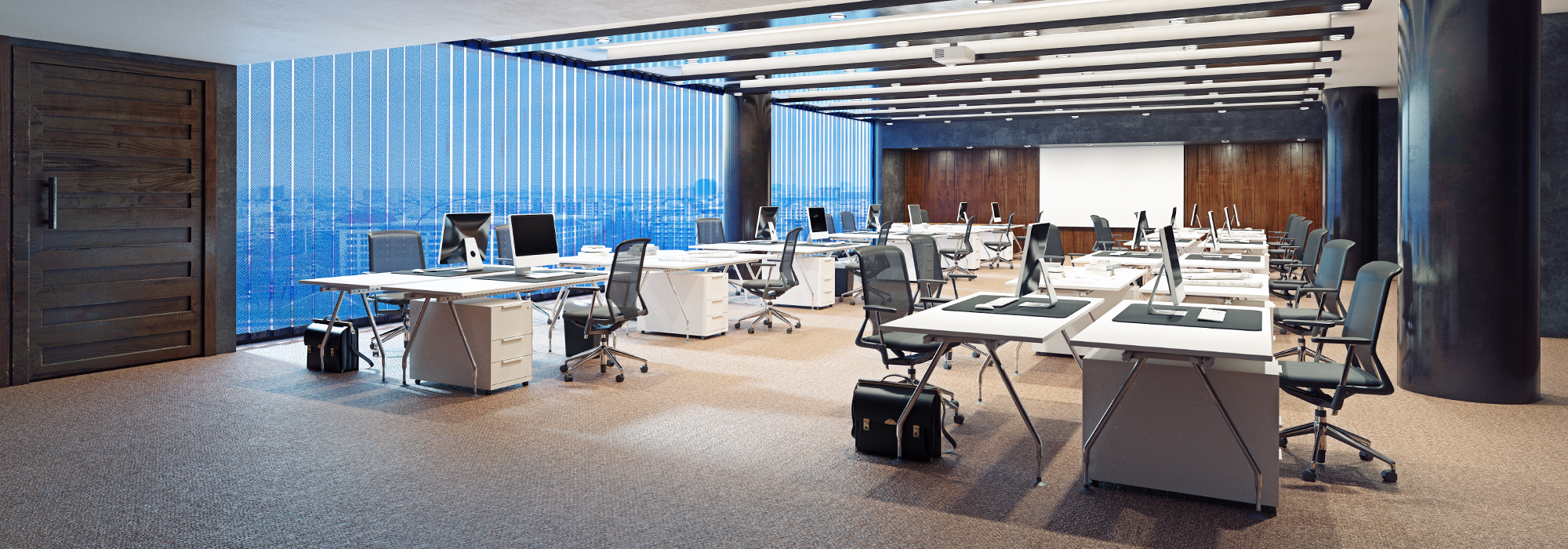
A property manager is usually answerable to tenants for cleaning without being on site to watch it, so the useful part of a quality program is the record it leaves behind. At Associated, on-site supervisors run daily inspections, regional management conducts weekly assessments, and the Quality Assurance Manager performs random audits as part of a documented quality assurance process.
Inspection results, customizable checklists, reports, and tickets are all logged in OrangeQC software rather than kept informally. The practical effect is that a tenant complaint can be answered with an inspection history and a ticket rather than with an assurance, which matters most in a multi-tenant property where the same complaint may arrive from three directions.
Associated holds the Green Seal Standard for Commercial and Institutional Cleaning Services, GS-42, and runs an eco-friendly Go Green Cleaning Program built on non-toxic and biodegradable products, microfiber cloths and mops that reduce chemical and water use, and high-efficiency equipment.
In an office the effect lands on the people at the desks. Reduced chemical exposure matters in a sealed facility where air is recirculated and staff sit in it for a full shift, and product selection is also one of the first things asked about by tenants who carry sustainability reporting of their own.
Deborah Zagami founded Associated in 1987, and the head office is still in Crofton, Maryland. We received the Top MBE Award in 2009 and 2013. Office facilities sit alongside the other facility types the company cleans, which include municipal buildings, hospitals and labs, residential communities, schools, car dealerships, and restaurants.
That range has a practical effect on an office account. A contractor working in hospitals and schools is already delivering to documented inspection standards and to access windows it does not control, and an office property with restricted floors and tenant-specific scopes asks for the same discipline in a different shape.
Office cleaning services are priced and scheduled facility by facility, which is why the process starts with a walk-through rather than with a figure over the phone. Contact Associated to arrange one, or call (800) 721-9068 toll-free or (410) 721-1818 locally.
A walk-through moves faster when the following are on hand: total square footage and the number of floors, current occupancy and tenant count, the hours the facility is available for cleaning, whether daytime porter coverage is wanted, floor surfaces by area, restroom counts by floor, and any areas that need to be excluded or escorted.


