


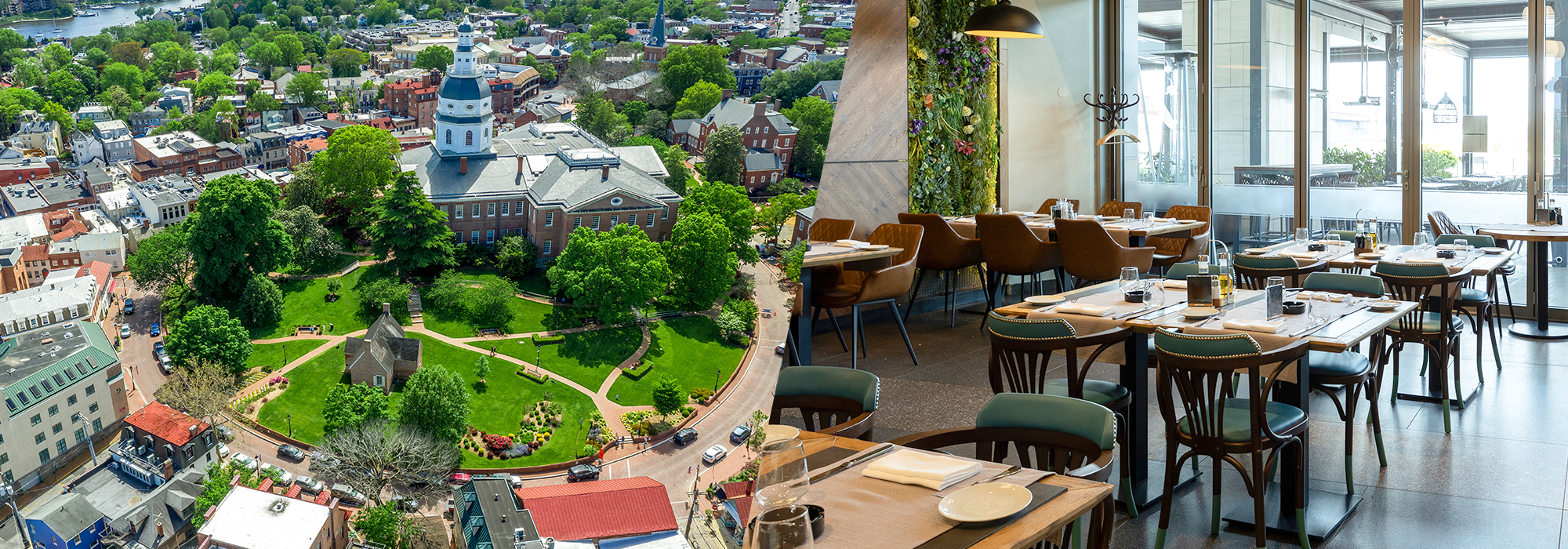
A restaurant is one of the few commercial facilities where the cleaning has to be finished before the building can open, not simply done at some point in the week. Associated Building Maintenance runs recurring restaurant cleaning services for food-service facilities in Annapolis and the surrounding parts of Anne Arundel County, with the schedule built around when each site is empty.
Proximity is the practical part of that. The head office is in Crofton, inside the same county, so Annapolis sits in the core of the service area rather than at the edge of it. Behind that sit over 1,000 team members and more than twenty million square feet maintained daily, which is what makes a missed shift recoverable. A kitchen that has to pass a pre-open check at ten thirty cannot wait for the next scheduled visit, and a crew pool of that size can absorb an absence without the dining room paying for it. Associated has cleaned commercial facilities since 1987.
Annapolis makes two demands that a suburban office park does not, and both are settled during the consultation and site visit rather than discovered in the first month.
The first is access. Much of the restaurant trade sits downtown, around City Dock, and along the West Street corridor, where loading, parking, and street access are far easier to arrange before dawn than at the end of service. Crews are scheduled into that window deliberately, and where a shared alley, a permit, or a narrow service entrance is involved, the arrangement is agreed with the operator up front.
The second is the calendar. Trade here does not sit flat across the year. The sailing season, the autumn boat shows, graduation and commissioning weeks, and the stretch of holiday parties each push a dining room to capacity for days at a time, then release it. A frequency that suits a room in February is the wrong frequency for that room in October. Because scope is set per facility rather than across a group, a seasonal uplift can be written into the program instead of being handled as an emergency, and an operator with two or three Annapolis locations can keep one plan while each site keeps its own hours.
24-hour emergency response covers what the schedule cannot anticipate, including spills, equipment failures, and anything that would otherwise leave a room unusable before a service.
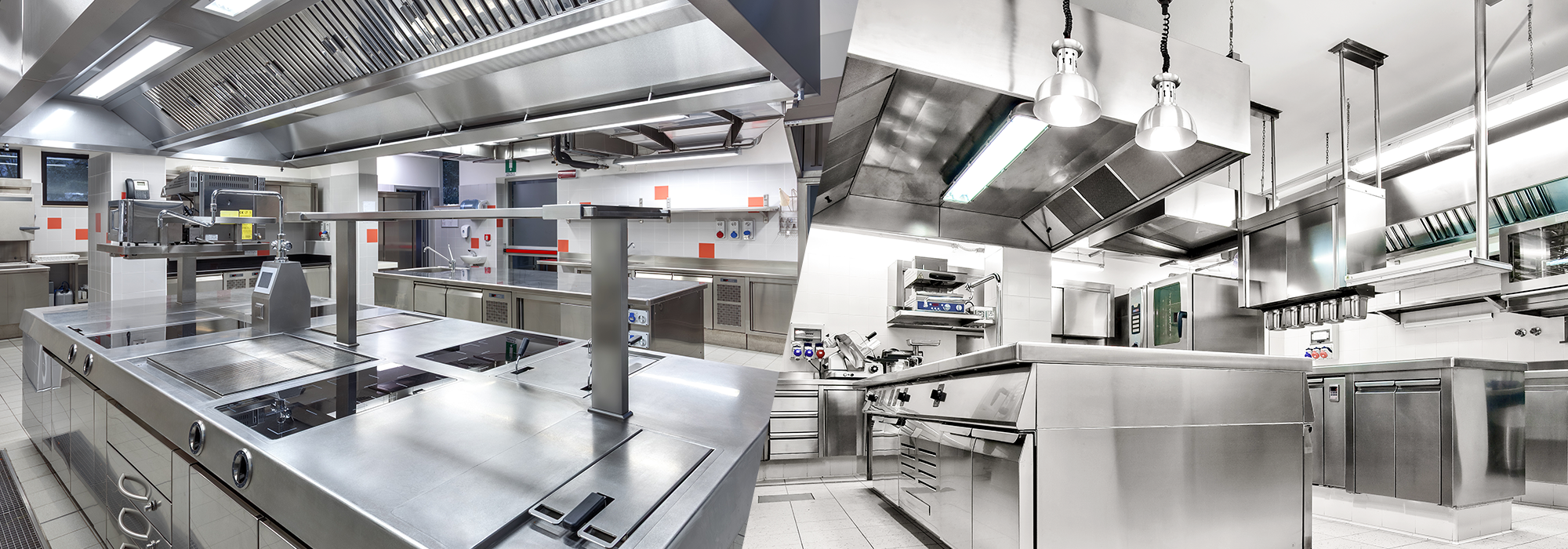
Scope is written for the individual facility, so a counter-service location with one dining room and a full-service restaurant with a bar, a private room, and a patio are quoted differently. The recurring work is delivered under General Cleaning & Porter Services on a daily, weekly, or bi-weekly cycle.
Kitchen floors wear faster than any other surface in the building. Floor maintenance is scheduled at whatever frequency the facility actually needs, and it reaches the places a kitchen team rarely gets to during its own close: the walk-in approach, dry storage, the run to the dish pit, and beneath fixed equipment. Waste and recycling removal, bin washing, employee restrooms, and the break area usually sit in the same scope. Hoods, cooking equipment, and grease interceptors are specialist trades and are not assumed to be included, so where the line falls is confirmed in writing at the assessment.
Guests grade a restaurant on the room, and on the restroom before the food. A nightly program generally takes in dining room floors, seating and booths, fixtures, the host stand, entryways and mats, and restrooms on a fixed checklist rather than as time allows. Disinfecting services cover what passes between staff and guests through a service, from door handles and handrails to POS terminals, menus, and chair backs, with hospital-grade product on high-touch surfaces and a frequency set by traffic. Window washing runs on its own monthly or quarterly cycle, and in a waterfront town the salt air and the foot traffic tend to decide where it sits in that range.
Some work is easier to book ahead than to arrange in a hurry. Event cleanup covers private functions, catered events, and the seasonal peaks above, which in Annapolis arrive together. Post-construction cleaning handles the final clean after a refresh, a kitchen rebuild, or a new fit-out, which most operators need once and have no reason to staff for.
What a cleaning contract is worth depends entirely on the nights nobody checks, which is why quality assurance is documented here rather than left to the account manager. Site supervisors inspect daily, regional management assesses weekly, and the Quality Assurance Manager audits at random. Findings go into OrangeQC, with checklists, reports, and ticketing, so a manager who flags a problem has a record of it and a closing date rather than a phone call.
Continuity does as much work as oversight. Retention runs above 87%, and in a kitchen that shows up as crews who already know which drain covers lift, where the mop sink is, and which door is alarmed after close. New crews on a rotating schedule relearn that every few weeks.
Associated is certified to the Green Seal Standard for Commercial and Institutional Cleaning Services, GS-42, and works to an eco-friendly Go Green Cleaning Program. In a restaurant the effect is mostly in the chemistry and the kit: non-toxic and biodegradable products, microfiber cloths and mops that cut both chemical and water use, and high-efficiency equipment. Lower chemical load counts for more in a room where food is prepped and where staff work long shifts in the same air, and it is usually noticeable in how a dining room smells at open rather than in anything on the invoice.
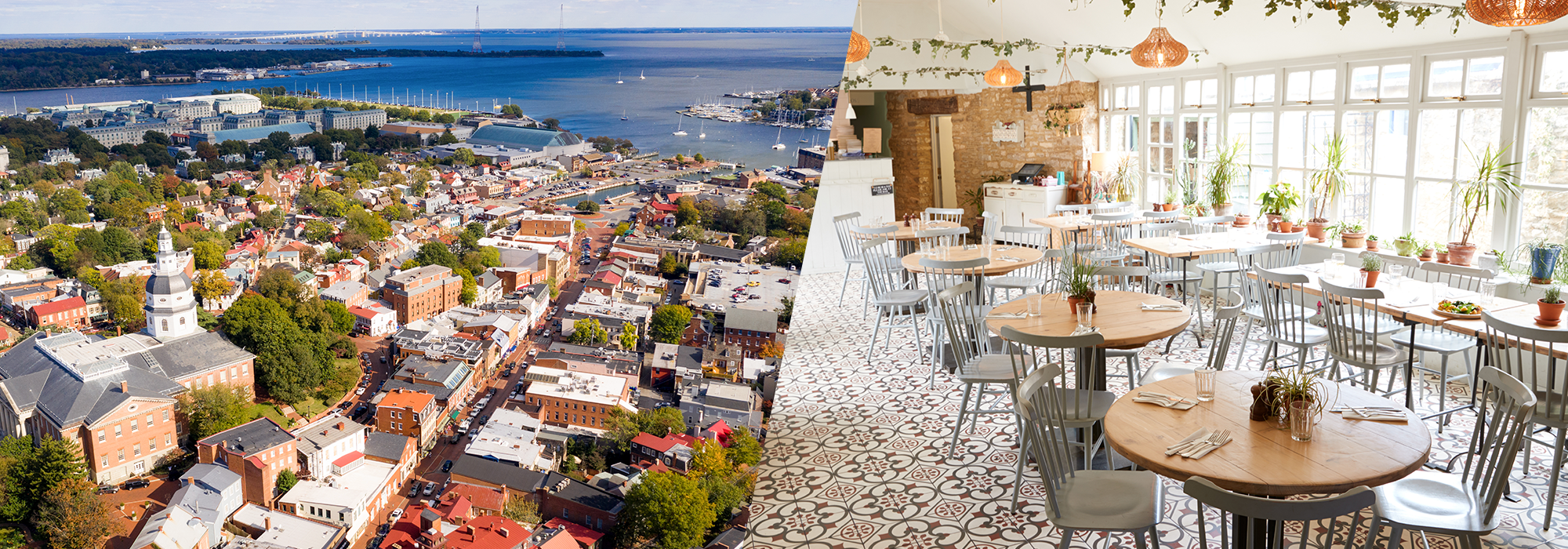
Deborah Zagami founded the company in 1987, and it is still run from Crofton, Maryland, which puts Annapolis, Parole, Eastport, Edgewater, Arnold, and Severna Park within the same county as the operation serving them. It is woman-owned, and it received the Top MBE Award in both 2009 and 2013 as one of the Top 100 Minority Business Enterprises in the Mid-Atlantic Region.
Food service is one of several facility types in the book, alongside office complexes, municipal buildings, hospitals and labs, residential communities, schools, and car dealerships. That matters more than it sounds. A contractor already cleaning hospitals and schools works to inspection standards and to fixed overnight access on much larger sites, which is the same discipline a restaurant needs in a far smaller footprint. Facilities outside food service in the same market are covered through commercial cleaning and janitorial services in Annapolis.
Pricing and scheduling are set per facility, so the first step is a walk-through. Contact Associated to arrange one, or call (800) 721-9068 toll-free or (410) 721-1818 locally.
A faster assessment is one where the following is to hand: front and back of house square footage, seating capacity, current operating hours, the window the building is free for cleaning, floor surfaces by area, the number of restrooms, and anything currently done in-house that should stay in-house.


