


Associated Building Maintenance’s head office is in Crofton, at 2140 Priest Bridge Court. The proximity to Crofton restaurants makes us a convenient choice. A crew covering a Crofton kitchen is not travelling in from another county at two in the morning, and a supervisor asked to look at a problem the same day does not have to give up half a shift to do it.
We have cleaned commercial facilities since 1987 and our company is woman owned. Behind the local crews is a workforce of over 1,000 people and a daily footprint past twenty million square feet, which means there is always someone on hand. Recurring restaurant cleaning is scheduled around the hours each site is empty rather than around a fixed crew rotation.
Most of the restaurant trade in Crofton sits in shopping centers and along the Crain Highway and Crofton Parkway corridors rather than in a walkable downtown, and that shapes the job in ways a town-center program does not have to think about. Service areas, loading zones, and dumpster enclosures are frequently shared with the other tenants of the center, and the landlord usually has rules about when a contractor can be on the lot and where waste goes.
Those arrangements get worked out at the consultation and site visit, which is the first of the four steps in the program, rather than being negotiated after the first invoice. Where a shared enclosure, a restricted loading window, or a center-wide quiet period applies, the schedule is written around it. That is less about courtesy than about not sending a crew to a service door blocked by somebody else’s delivery.
The weekly rhythm here is a commuter pattern rather than a tourist season. Weekday lunch trade, weekend family trade, and the run of holiday parties load a room differently at different points in the week, and a frequency that suits a Tuesday is often wrong for a Saturday. Scope belongs to the site rather than to the contract, so a heavier weekend clean can be built in, and an operator running two or three units nearby can hold one plan with the hours set separately for each. 24-hour emergency response covers the rest: a spill, a failed appliance, or anything that would put a room out of use before a service.
No two rooms get the same task list. A counter-service unit and a sit-down restaurant with a bar and a private room differ in what has to be cleaned and in how many hours the building is free for cleaning it, which is why the task list is written at the assessment rather than taken off a sheet. Recurring work runs under General Cleaning & Porter Services, daily, weekly, or every other week.
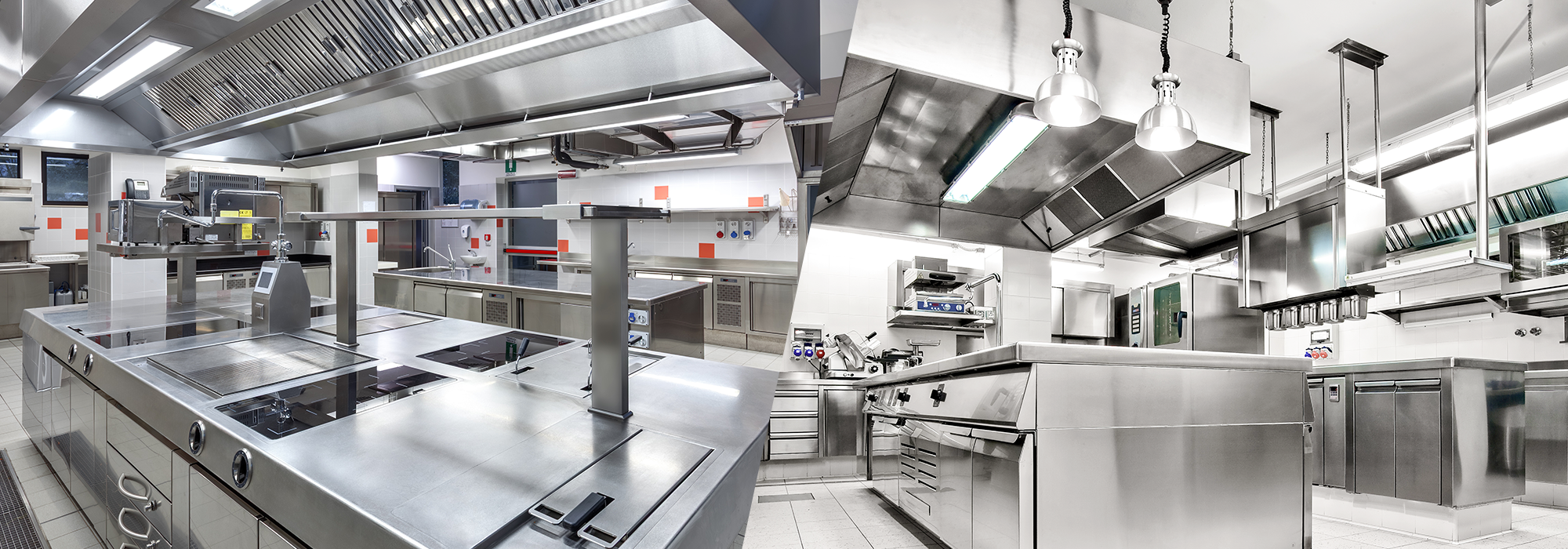
Nothing in a restaurant takes the punishment a kitchen floor takes, and it shows at the line and the dish pit before anywhere else. Floor maintenance runs at whatever frequency the room actually needs, and it reaches the spots a kitchen team almost never gets to on its own close: behind and under fixed equipment, the walk-in approach, and dry storage. The staff restroom, the break area, bin washing, and waste and recycling removal usually fall in the same scope. Hood, cooking equipment, and grease interceptor cleaning is normally a specialist trade, so that boundary is put in writing at the assessment and not left for either side to assume.
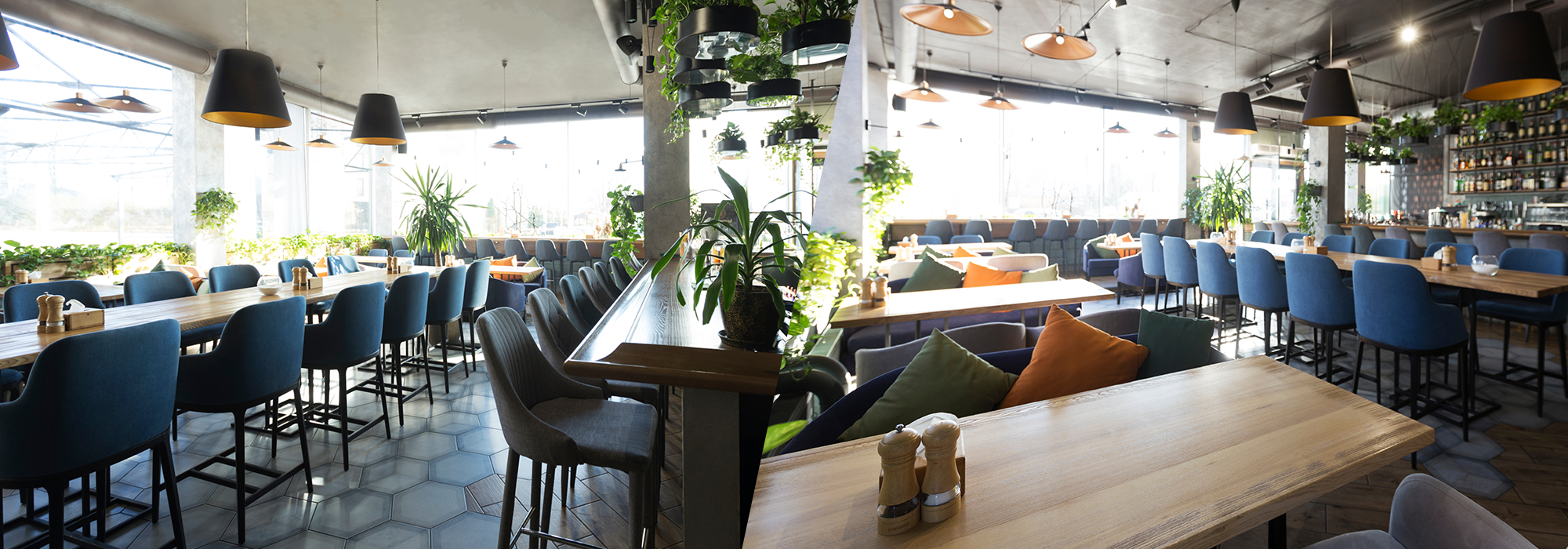
A guest grades the room before the food and the restroom before either. A nightly program generally covers the dining room floor, seating and booths, fixtures, the host stand, and entryway mats, with the restrooms held on a fixed checklist so that they do not become the task that absorbs whatever time is left at the end of a shift. Disinfecting services handle the surfaces that move between staff and guests all evening: door handles, handrails, chair backs, menus, and the terminals every server touches, with hospital-grade product on the high-touch items at a frequency set by traffic. Window washing sits on its own monthly or quarterly cycle, and on a road-facing frontage the grit off the highway and the parking lot traffic usually decide where in that range it lands.
Some work costs far less to arrange in advance than in a hurry. Event cleanup covers catered functions, private hires, and the weeks a room runs at capacity. Post-construction cleaning is the final clean on a refit: a remodel, a kitchen rebuild, or a new unit taking a space in a center. That is a job an operator faces once every few years and has no reason to keep staff for.
What a cleaning contract is worth gets decided on the nights nobody checks, which is why quality assurance is a documented process here rather than an understanding between an operator and an account manager. Inspection runs at three levels: the site supervisor daily, regional management weekly, and the Quality Assurance Manager at random. Findings land in OrangeQC with checklists, reports, and ticketing, so an operator raising a problem gets a record and a closing date instead of a phone call.
Oversight is only half of it, and the other half is who turns up. Retention runs above 87%, which in a kitchen means the crew working the room tonight is usually the crew that worked it last month. A crew that already knows which drain covers lift and which door is alarmed after close is not relearning the room every few weeks.
Associated is certified to the Green Seal Standard for Commercial and Institutional Cleaning Services, GS-42, and works to an eco-friendly Go Green Cleaning Program using non-toxic and biodegradable products, microfiber cloths and mops that cut chemical and water use, and high-efficiency machines. Chemical load matters more in food service than in most facility types, because the surfaces being cleaned are the surfaces food touches a few hours later and because kitchen staff spend a full shift breathing whatever was used overnight. The difference is usually noticed in how a dining room smells at open rather than in anything an operator can point at.

Associated was founded in Crofton in 1987 by Deborah Zagami and has never left. We are woman owned and hold the Top MBE Award from 2009 and 2013. The same crews reach restaurants in Crofton and across the surrounding part of Anne Arundel County.
Restaurants are one of seven facility types in our repertoire. The others are car dealerships, schools, residential communities, hospitals and labs, municipal buildings, and large office complexes, and that range does more work for a restaurant than it appears to. Cleaning a hospital means working to written inspection standards on an access window somebody else controls, which is the same discipline a kitchen needs on a much smaller floor.
It is difficult to confirm details over the phone, so a walk-through comes first. Get in touch to book one, or call (800) 721-9068 toll-free or (410) 721-1818 locally.
A few specifications up front will speed it up: square footage front and back, the seat count, trading hours, the window the building is genuinely free, floor surfaces by area, how many restrooms there are, any center or landlord rules covering contractors on the lot, and whatever the team already handles itself and would rather keep.


